Pirical Pioneers NYC 2026: Why Data-Driven Decisions Matter More Than Ever
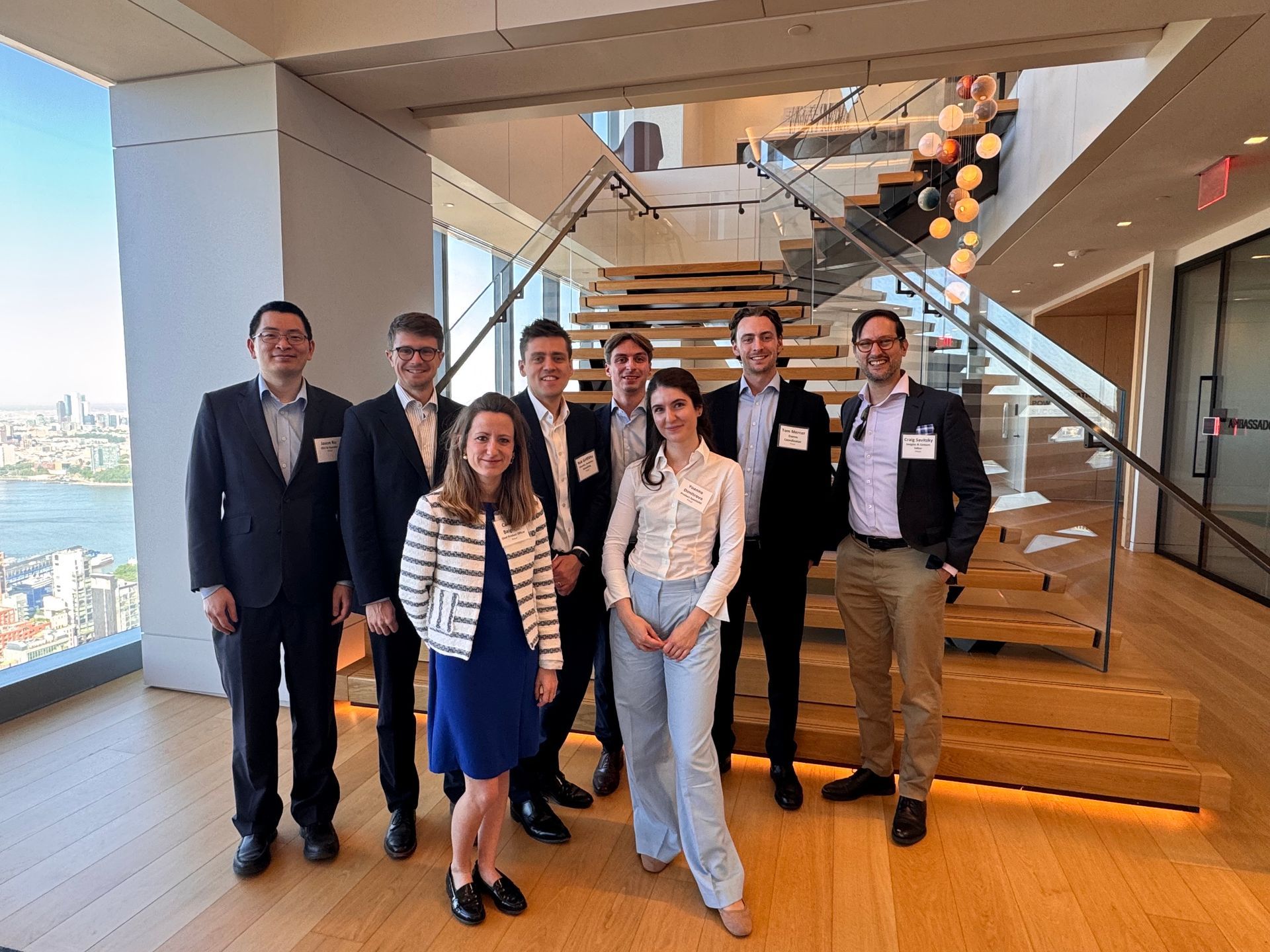
For the first time, we brought our flagship customer conference to New York City. Hosted at Crowell & Moring's offices, it was a great morning of insights, product updates, and networking with our community of recruitment, strategy, business development, and client intelligence leaders.
We had a fantastic line up of speakers from a number of leading law firms and organizations, including Crowell & Moring, Mintz, Proskauer, and of course Pirical. They shared how recruitment and strategy teams are using data to inform hiring, growth, and client development. It was a morning of networking, candid conversations about AI, and sessions that dug into the trends reshaping the US legal market.
Here's a recap of the day!
What The Highest-Growth Firms Are Doing Differently
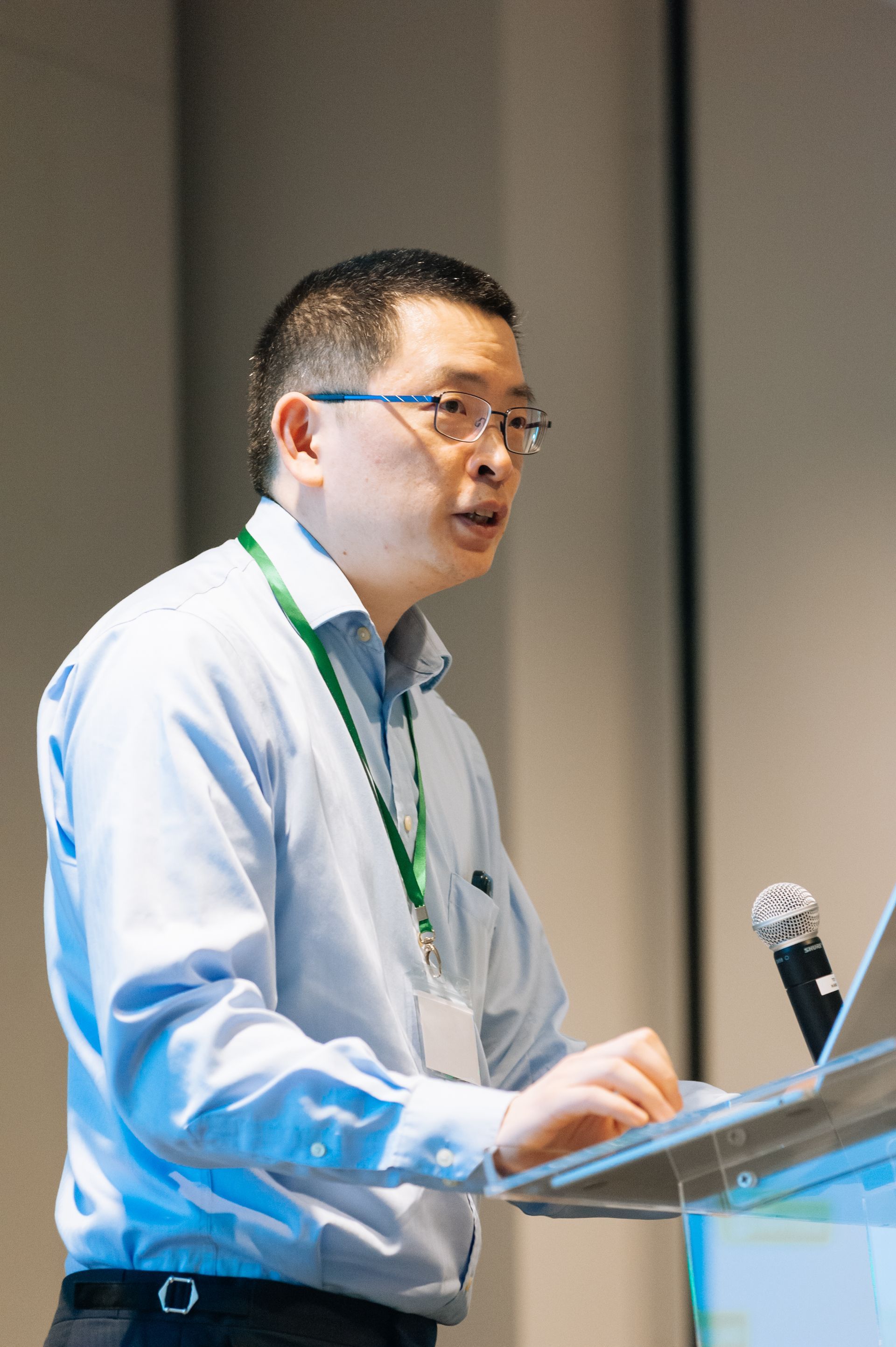
Jason Ku (Pirical)
The opening session laid out a stark picture of where the US legal market is heading. In 2015, the top 10% of firms earned 24% of market revenues, with a Gini coefficient of 0.41. By 2025, that share had climbed to 40% of revenues and a coefficient of 0.55. On current trajectory, the top 10% of firms are on track to earn 60% of all legal revenue by 2035, with recent mega-mergers accounting for roughly 30% of consolidation to date.
So how are the top firms pulling away? The analysis broke revenue growth into its component parts. Revenue growth equals revenue per lawyer multiplied by number of lawyers. The leading firms are compensating for slower headcount growth with higher revenue per lawyer. Upper mid-tier firms, by contrast, are growing fastest, but from a smaller base. The mathematical takeaway is striking: the top half of the mid-tier is on course to surpass the bottom half of the AM Law 100 within five years.
Focus and pricing power emerged as the clearest differentiators. Firms concentrating on two core practices saw the strongest results at 9.5% growth, outperforming both single-practice firms and those spread across three or more. Pricing power mattered just as much: firms able to raise rates above inflation grew 10.8% versus 7% for those without, a 3.8% differential. The contrast in revenue retention was just as sharp, with focused firms holding 98% of revenue while unfocused firms without pricing power retained just 60%, losing 40% annually.
The session also reframed how firms should think about lateral partner hiring. In reality, only a third of lateral partner hires prove profitable, with the other two thirds generating negative returns averaging -4.6%. That makes lateral hiring look less like a venture capital model, where one big hit pays for the misses, and more like private equity. But done right, it works: hiring into focused practice areas with pricing power yields 1.7x returns versus 0.57x for unfocused areas.
On AI, the early findings were nuanced. Hours per matter are beginning to decline, but so is revenue per matter, with the revenue drop less steep than the hours drop, suggesting efficiency gains are being shared with clients. There is no evidence yet of increased matters per lawyer, and the team is now tracking token usage per lawyer to better understand adoption patterns across seniority levels.
The Human Behind The Hire
Shannon Callington (Crowell & Moring), Shannon Gallagher Davis (Mintz), Susan Schonfeld (Proskauer), and Yoanna Dimitrova (Pirical)
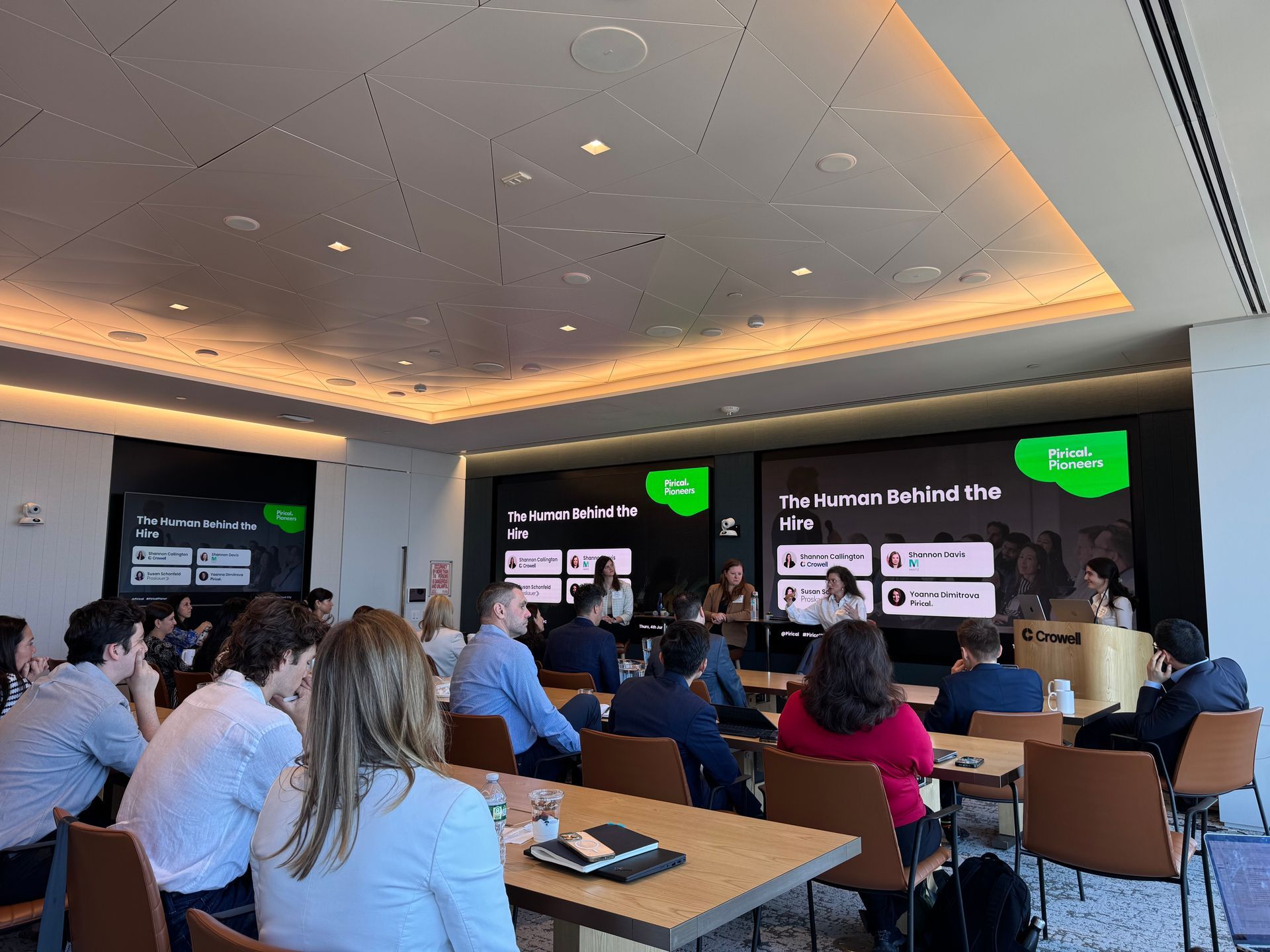
Our recruitment panel explored how data and human judgment work together, and where each has its limits. A recurring theme was using data for expectation management: leadership often sets growth targets that don't reflect what the market can actually deliver, and Pirical data helps set realistic baselines for partner conversations. When only a handful of groups have moved in a target space over twelve months, the conversation shifts from "find more candidates" to smarter, more targeted strategy, and partners can maintain focus without the fear of missing out.
The panel was candid that the ask is sometimes flawed, and the job is to do what partners mean rather than what they literally say. One memorable example: a request to grow Boston litigation was really about capturing Boston-based company work, which opened up a far broader candidate pool once the underlying business question was reframed. Search parameters that surface only three people are too tight; ones that surface 800 are not specific enough. The data constantly redirects the search.
On individual versus group moves, the panel noted that a series of moves is often more telling than any single hire, and group moves typically start with one senior "driver" who brings others along. That's where relationships with search firm partners become essential, supplying the anecdotal intelligence that doesn't show up in the data. As one panelist put it, you can't have one without the other: data plus people on the ground.
The panel also shared practical tools for getting hires right, from building a business case grounded in year-over-year client growth trajectories to coaching candidates with realistic, ten-year expectations. A consistent finding: first-time movers are often the least successful hires, because they underestimate the difference between their business and their portable business. As the panel reminded us, people move with their hearts, not their heads, and using AI to handle the menial work simply frees up more time for the human connection that closes a hire.
On AI in the workflow, the panel was enthusiastic but clear-eyed. Tools are now used to screen high volumes of resumes against criteria, synthesize documents such as extracting PE deals from hundreds of bio pages, and act as a thought partner in evaluating candidates. Different platforms serve different needs, with secure tools reserved for confidential candidate information and others used for professional development and scheduling. Hallucination remains a real risk, so verification and savvy use are essential, and the consensus was that AI's edge is temporary and will equalize as adoption spreads. Human connection remains the irreplaceable differentiator.
First Look: Pirical In-House
Chris Griffiths (Pirical)

Chris gave the room a first look at a major product launch: our in-house lawyer database, releasing more than 150,000 US-based in-house and government attorneys as searchable profiles.
The dataset spans every industry from startups to the Fortune 500, covering roles from junior in-house counsel through general counsel, and includes company, role, location, and historical private practice background. Built from multiple sources to account for the varying ways US states register their bars, the infrastructure is designed to scale further over time.
The use cases resonated immediately with the room. For recruitment teams who have exhausted the law firm market, in-house counsel are now a targetable pool, filterable by expertise such as BigLaw plus securities experience, with connection data surfacing mutual contacts for warm introductions. For business development, teams can find general counsel at target companies, search practice areas in natural language, and target based on a lawyer's historical private practice specialization. And for tracking movement, teams can monitor when in-house counsel change roles, spot new opportunities, and flag client relationship vulnerabilities the moment outside counsel leaves.
What's On The Mind Of Law Firms' Strategy Teams
Camille Beignon (Pirical)
Camille worked through some of the most common questions we hear from law firm strategy teams.
On the long-term impact of AI on graduate intakes, the data shows first-year associate numbers have stayed stable since 2018, and because only 22% of graduates remain at the same firm after seven years, reducing graduate intake has only a minor short-term impact on the partner pipeline, though it sets up a likely war for 5–8 PQE (post-qualification experience) lawyers in the early 2030s.
On AI and headcount, half of the AM Law 25 have announced reductions over the past twelve months, and while every one of them grew revenue, not all grew headcount; the fastest revenue-growing firms actually increased partner headcount, while those cutting headcount rebalanced toward partners.
The session also covered merger modeling, from geographic presence mapping and post-merger global ranking projections to Chambers analysis by practice area and client overlap identification for acquisition targets.

An exciting development from this session was the announcement of our brand new Pirical connector to Claude!
Users of Claude can now query Pirical data in plain English and receive automated analysis, visualisations, and interpretations. Connectors to other AI tools are already being planned, as we aim to meet you and your teams where you already work.
Reach out to learn more!
Final Thoughts
The thread running through the day was the same one that has defined Pirical Pioneers since its inception: the firms that win are the ones that make decisions with evidence rather than instinct.
What’s changed is the urgency and scale of information available. AI is rapidly overhauling certain processes, the market is consolidating, talent is moving faster, client needs are evolving, and competitor intelligence is easier to access than ever.
There’s plenty of data out there, but knowing exactly what to do with it is a common challenge faced by many of our attendees and speakers. Pirical Pioneers tries to answer questions like these and show law firms how to make data-driven decisions that drive real impact.
Stay up-to-date with the latest market insights and law firm rankings
Subscribe to email updates
Subscribe to content