
Law Firm Mergers & Market Growth: Key Insights from Our Latest Webinar
In our most recent webinar, Francesco (Account Executive) and Ruiz (Product Manager) walked attendees through a data-driven analysis of law firm mergers.
From the headline-grabbing mega-deals of 2025, to the wave of announcements and consolidations already reshaping the industry in 2026, here's a quick summary of the key insights shared.
2025: Record-Breaking Deal Value
2025 saw
47 major completed M&As, a
31% increase over 2024.
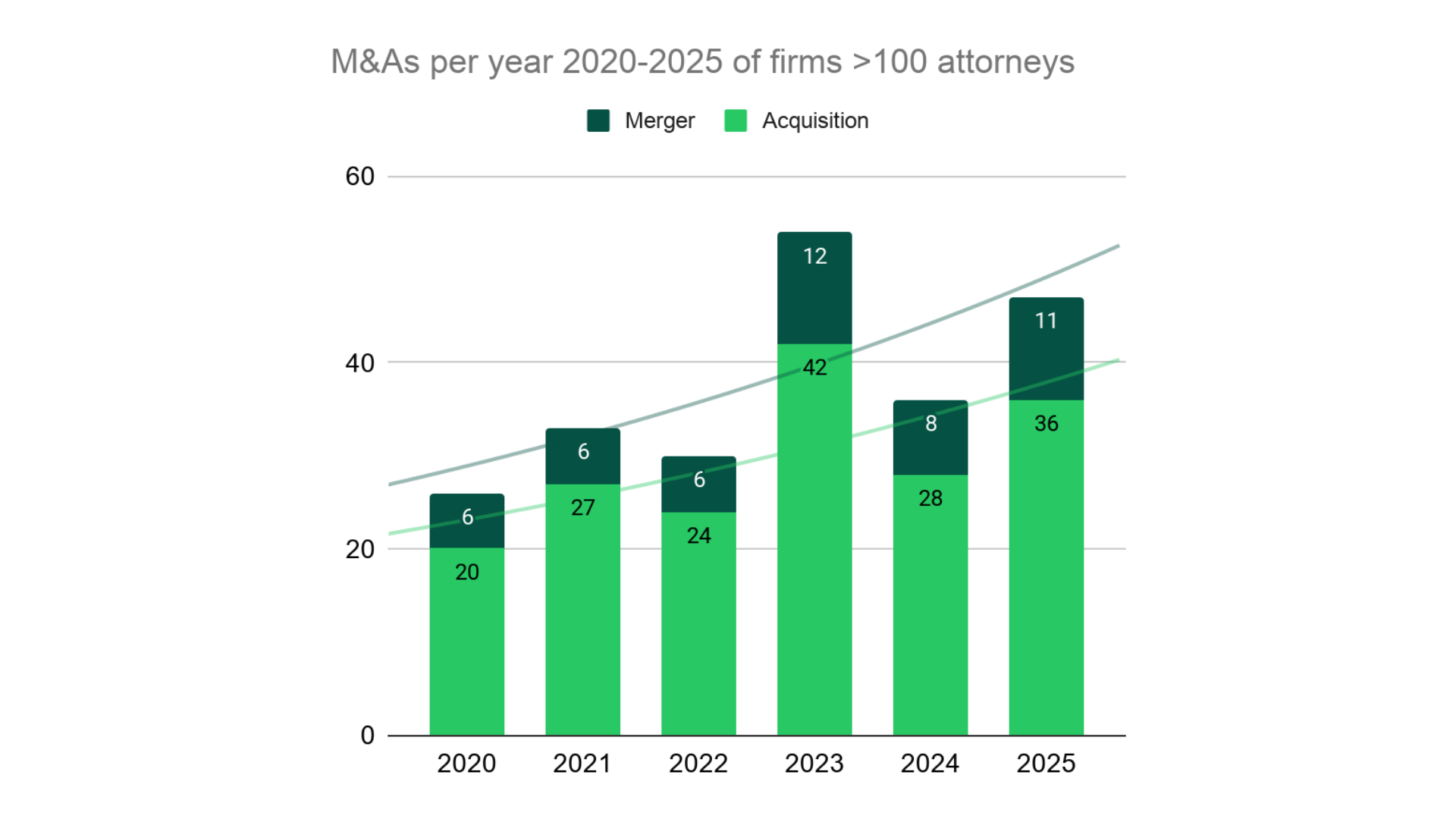
And while 2023 held the record for sheer volume of M&A deals, 2025 emerged as the highest year on record for total deal valuation (over the past five years). Three mergers in particular stood out:

- Post merger revenue $2.0 billion
- Affected 2.7k lawyers
- Landmark transatlantic growth, establishing a significant foothold in the US

- Post merger revenue $2.85 billion
- Affected 1.7k lawyers
- Significantly expanded their NY private capital and hedge fund practice

- Post merger revenue $1.0+ billion
- Affected 1.1k lawyers
- Boosted their presence in Colorado & Illinois
2026: A New Record Year in the Making
Even before the end of Q1 2026, four major mergers had already been announced or completed. These are collectively expected to affect 8,200 lawyers. For context, the eight mega-mergers of 2025 affected approximately 10,000 lawyers across the full year.
The four deals to watch:
AI Investment and the Merger Wave: Coincidence or Correlation?
Running in parallel to the surge in M&A activity is a rapid increase in AI investment across the legal sector. According to data from the Thomson Reuters Institute, law firm spend on legal technology has nearly tripled in the past three years, driven largely by the rise of generative AI.
Are these two trends connected? AI investment may not be direct cause of increased merger activity, but there is a compelling case for why firms might pursue both strategies simultaneously:
1. Scale and economics
As agentic AI systems become more powerful and more expensive, smaller and mid-sized firms may find it increasingly difficult to compete. Last year, a
Harvard Business School article highlighted that tools like Harvey and Leya could price out firms that lack the budget or scale to integrate them effectively. Mergers can enable firms to pool their innovation budgets and accelerate AI adoption.
2. Proprietary data advantage
Mergers also allow firms to consolidate their internal datasets across practice of law and business services. This means firms can reach the critical mass required to train and refine custom AI systems.
This intersection of M&A strategy and technology investment is a trend worth watching closely.
A Framework for Understanding Legal Market Consolidation
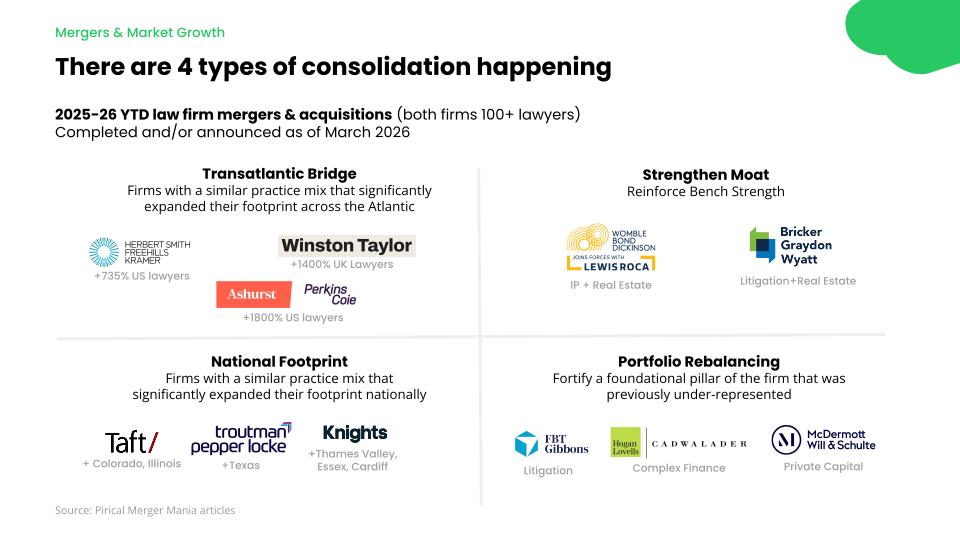
Looking across the deals of 2025 and early 2026, Pirical's analysis identifies four distinct types of consolidation happening in the market:
1. Transatlantic Bridge
Firms previously established in the UK and Australian markets are using mergers to build or deepen their US presence. The HSF / Kramer Levin merger is the most prominent example, and the anticipated Taylor, Akin, and Skooi mergers appear to follow a similar logic.
2. National Footprint Expansion
Firms such as Taft, Troutman Pepper, and Knights plc are using M&A to extend their reach within their home market. Taft, for example, significantly expanded its presence in Colorado and Illinois through several deals in 2025. Knights plc pursued a similar strategy in the UK.
3. Practice Group Reinforcement
Some firms are using mergers to deepen specific practice areas. Womble Bond Dickinson's merger with Lewis Roca is a clear example: already strong in IP and real estate, the combined firm saw a further increase in IP partners.
4. Portfolio Rebalancing
Certain firms are using consolidation to fortify practice areas that were previously underrepresented. The Hogan Lovells / Cadwalader combination, for instance, is expected to produce a firm with a significantly larger and more specialised complex finance capability, combining capital markets and banking finance practice groups.
The Reshuffling of the Global 200
The current wave of mergers is set to redraw the global legal rankings significantly. Three merged firms are expected to be in the Global top 20 by gross revenue:
The Ashurst / Perkins Coie merger is expected to produce the largest gains in gross revenue (+92%).
Beyond the headline movers, Womble Bond Dickinson and FBT / Gibbons are also projected to climb approximately 30 positions each in the global rankings.
Organic Growth Is Still Possible, But Harder
Not every firm growing its headcount is doing so through M&A. When Pirical analysed headcount growth across global law firms from January 2025 to February 2026, 70% of the top growers had done so through merger activity.
However, in this timeframe, three firms demonstrated that meaningful organic growth remains achievable:

Without any merger activity, Gordon Rees grew from the 11th to the 5th largest firm in the US.
Had M&A activity been excluded from the rankings, they would have been the top firm for headcount growth in 2025.

Simpson Thacher climbed to become the 15th largest firm in the US, having previously been 22nd, through recruitment alone.

Greenberg Traurig showed comparable organic growth at the global level, moving from the
15th to the
10th largest firm globally.
A Word of Caution: Mergers Come With Risk
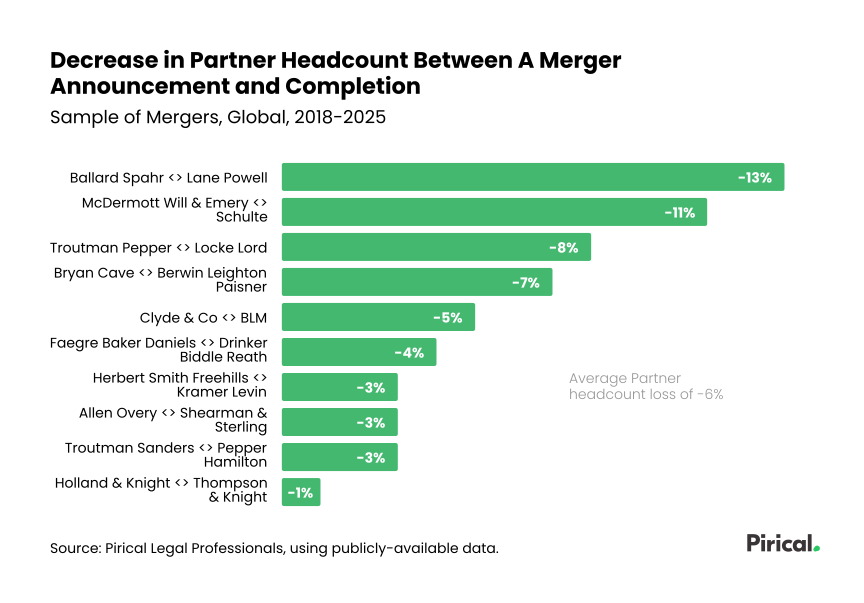
For firms considering M&A as a growth strategy, one data point from Pirical's internal research is worth keeping front of mind: mergers have historically triggered an average partner headcount loss of around 6% from the point of announcement to completion.
This is not a reason to avoid mergers, but it is a reason to plan carefully, particularly around partner retention and communication during the transition period.
Explore the Data Yourself
One of the highlights of the webinar was a live walkthrough of Pirical's Market Growth tool, which allows users to analyse headcount changes, merger activity, and partner movement at both firm and individual level.
Book a free demo with our team to see how
to explore the data behind merger activity and more!


Stay up-to-date with the latest market insights and law firm rankings
Subscribe to email updates
Subscribe to content