
Pirical Pioneers 2026: Why Data-Driven Decisions Are More Important Than Ever
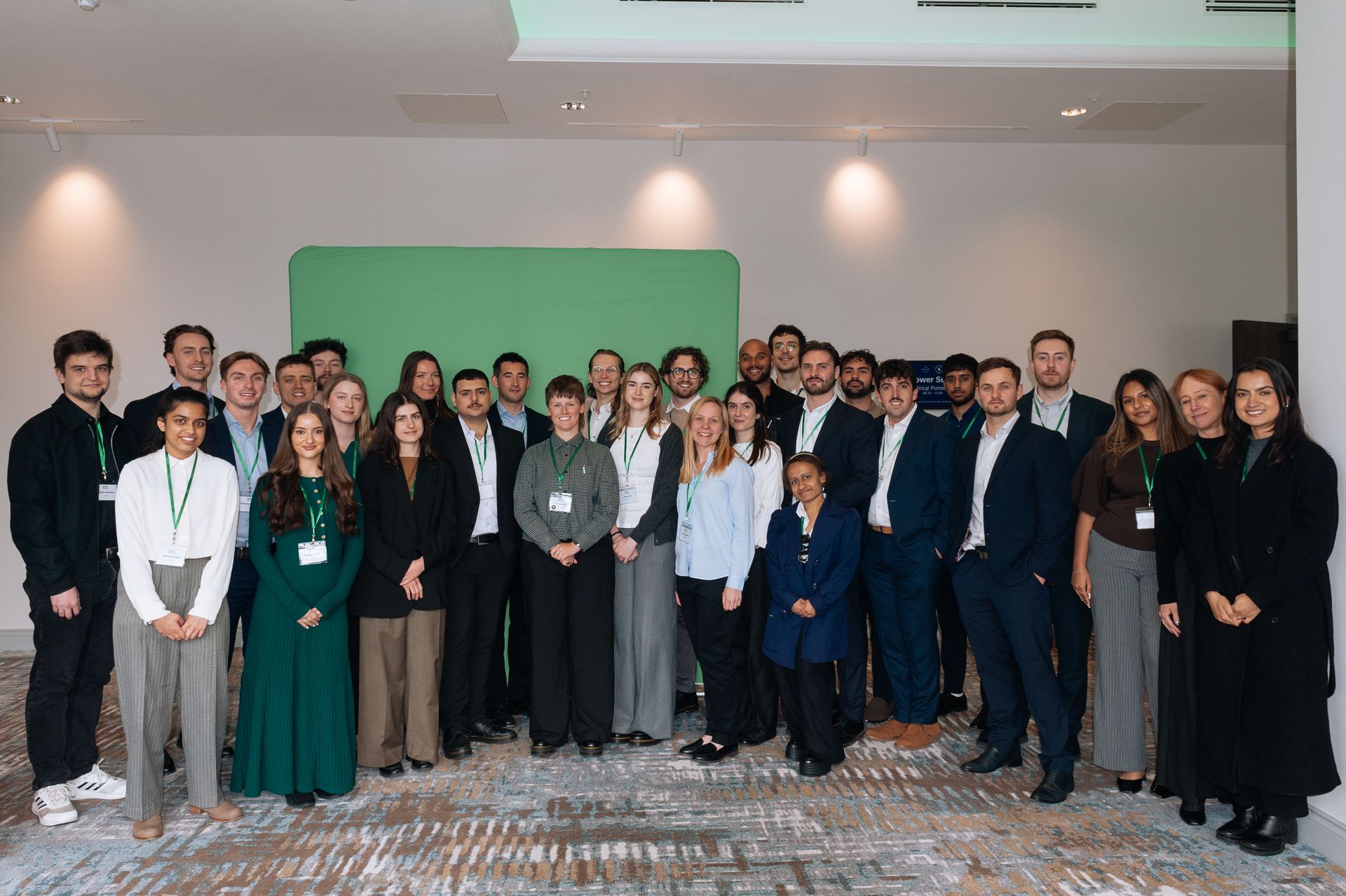
Last week, at our biggest customer conference yet, we hosted a great group of Recruitment, Strategy, Business Development, HR, and Diversity leaders for Pirical Pioneers 2026!
We had a fantastic line up of speakers from a number of law firms & organisations, including Clifford Chance, Linklaters, Norton Rose Fulbright, Bevan Brittan, Stephenson Harwood, Thomson Reuters Institute, Progress Together, and of course Pirical.
It was a fun morning of networking, conversations around AI, sessions that delved into some of the latest trends reshaping the legal market, as well as practical ways in-house recruitment and strategy teams are using data to inform hiring and growth strategies.
Here’s a recap of the day!
The Legal Market Is Consolidating Faster Than Most Firms Appreciate
Jason Ku (Pirical)
In 2015, the top 10% of firms claimed 24% of market revenue. This jumped to 41% in 2025. Recent mega-mergers have also led to ~30% market consolidation. All in all, the top firms are on track to earn half of all legal revenue by 2035!
So how are the top firms winning? Jason's analysis ran through a number of hypotheses around practice focus, revenue per lawyer, pricing power, and partner hires, revealing some interesting trends between different sizes of firms.
A systematic focus on core practices with high pricing power can grow revenue and revenue per lawyer faster. Practice and industry selection is also important: rates in corporate work for banking clients outpaced inflation, whereas corporate work for transportation clients saw falling prices.

Some mid-market firms have achieved growth through partner hires, but does this work? In reality, lateral hiring is a break-even game where the profits of the top-third cover the losses of the bottom two thirds. But lateral hiring can return a profit when done right. Hiring laterally into focus practices with high pricing power yields mid-market firms a 28% return on lateral hires.
How Recruitment Teams Can Move From Talent Acquisition to Talent Intelligence
Sam Larkins (Norton Rose Fulbright), Danielle Owens (Bevan Brittan), Sarah Manning (Stephenson Harwood), Sarah Langton (Clifford Chance), and Chris Griffiths (Pirical)

Our in-house recruitment panel discussed how hiring teams are shifting from order-takers to strategic advisors. As HR's only external-facing function, recruitment has a unique market viewpoint, but earning strategic influence requires using data to build credibility with firm leadership.
To be successful, recruitment teams need to first understand the firm’s strategy and priorities. Having access to the right data allows recruitment leaders to really understand the market, which then informs decisions and conversations with hiring partners and firm leadership.
Using data to understand the market is also vital to working with recruitment agencies. Assessing how challenging a role will be to fill helps decide when to spend time direct sourcing vs working with an agency. Sarah Langton pointed out that if a direct hire takes seven months to fill, it ultimately costs the firm far more in lost revenue than the agency fee.
AI has also started to play a key role in the recruitment function. Day-to-day processes can now be automated or sped up and research capabilities have evolved rapidly. This means hiring teams have more time and more tools to work strategically, ultimately shifting towards talent intelligence. "It's an exciting time to be in legal recruitment", said Sarah Manning.
Law Firms Aren’t Focused Enough on Client-Led Growth
Eve Starks (Thomson Reuters)

Eve presented some fascinating research that should give managing partners pause. Worked rates alone do not support firm growth.
Given larger headcounts, shifting leverage models, and AI-driven workflow efficiency, rate increases actually deliver diminishing returns. Most leadership discussions about growth remain heavily focused on supply-side levers: lateral hires, M&A, and brand positioning. But talent-led growth is “fragile without deliberate integration.”
So what's missing from the conversation? Clients. There’s a lot of opportunity in the market, but the issue is that client relationships are shallow. The session introduced a practical framework for identifying growth opportunity: rather than defaulting to the biggest spenders, focus on clients currently sitting at 10–24% of wallet share. These are engaged clients spending below industry benchmark, the easiest candidates for structured cross-selling and account development.
Eve ended with a few proven mechanisms that can help drive success in growing client relationships and account management. Having diverse lawyers and collaborative teams can help strengthen client relationships, while accountability and integration with firm strategy have proven to impact account management.
How Strategy Teams Are Turning Data Collection into a Competitive Advantage
Xiao Mei Li (Linklaters) and Camille Beignon (Pirical)

Xiao gave a practical example of how the financial analysis team at Linklaters use Pirical’s public dataset to maintain an in-house Power BI dashboard for competitor benchmarking and market entry.
While building the dashboard was fairly straightforward, it was important to get the data right by mapping practice areas to internal terminology, for example. Now automated quarterly, the dashboard provides firm leadership with clear directional data that shows how the market has moved over time, where the firm sits in the market relative to peer groups, and where there is white space and opportunities in certain practices or regions.
Looking ahead, the team plans to monitor billable hours instead of headcount, anticipating a 40% AI-driven volume reduction in research-heavy areas like due diligence. Having access to this data helps define Linklater's growth strategy and keep the firm competitive in core markets.
Camille followed up by answering some of the most common questions we get from law firm strategy teams. There were plenty of revealing insights on the long-term impact of AI on graduate intakes, tech-driven headcount reductions, predicting post-merger global rankings, identifying boutique M&A targets through shared client relationships, and mapping competitor depth to expose open white spaces.

An exciting development from this session was the announcement of our brand new Pirical connector to Claude!
Users of Claude can now query Pirical data in plain English and receive automated analysis, visualisations, and interpretations. Connectors to other AI tools are already being planned, as we aim to meet you and your teams where you already work.
Reach out to learn more!
Combating The Social Mobility Progression Gap Requires Transparent, Data-Driven Promotion Processes
Sophie Hulm (Progress Together) and Johanna Kurien (Pirical)
By looking at both Progress Together and Pirical data, this session compared visibility around social mobility in the worlds of financial services and law firms. In fact, both sectors follow similar trends relating to social mobility and fair career progression opportunities in the UK.
Progress Together has found that at the senior level, 61% of financial service workers come from higher socioeconomic backgrounds. At the junior level, that figure drops to just 51%. The legal sector mirrors this trend, with 78% of partners from high socio-economic backgrounds and 73% at the junior associate level. This often means that workers from lower socio-economic backgrounds are not being given the opportunity to progress into senior roles.
The barriers to those from lower socio-economic backgrounds are well documented: lack of networks, "fit" pressures, opaque promotion processes, and limited access to sponsorship from senior leaders who naturally gravitate toward people with similar backgrounds. From a business perspective this matters. Without a socio-economically diverse workforce, businesses miss out on untapped talent pools, opportunities for innovation, retention of talent, and resilient workers.
So how do we combat unfairness for people from lower socio-economic backgrounds in the workforce? Among other things, it's important to use transparent processes and utilise data to address disproportionality in promotions, as well as review progression criteria to ensure certain groups are not excluded.

Final Thoughts
The thread running through the day was the same one that has defined Pirical Pioneers since its inception: the firms that win are the ones that make decisions with evidence rather than instinct.
What’s changed is the urgency and scale of information available. AI is rapidly overhauling certain processes, the market is consolidating, talent is moving faster, client needs are evolving, and competitor intelligence is easier to access than ever.
There’s plenty of data out there, but knowing exactly what to do with it is a common challenge faced by many of our attendees and speakers. Pirical Pioneers tries to answer questions like these and show law firms how to make data-driven decisions that drive real impact.







Stay up-to-date with the latest market insights and law firm rankings
Subscribe to email updates
Subscribe to content