Secrets of Associate Productivity 2: Do Higher Salaries Increase Productivity? What’s the Right Combination of ‘Carrot’ and ‘Stick’?
Productivity is a hot topic for law firms. Uncovering what the most productive firms are doing differently promises to help firms maximize their revenues, without needing to hire more people or increase prices for clients.
Pirical has been working with customers to diagnose their current state of productivity and to test ideas about what really drives productivity across the market. We recently hosted a
webinar chatting through these ideas, covering salary, bonuses and more. Here’s some of what we learned.
Case study: Firm X is a Mid-Market National Firm in the UK
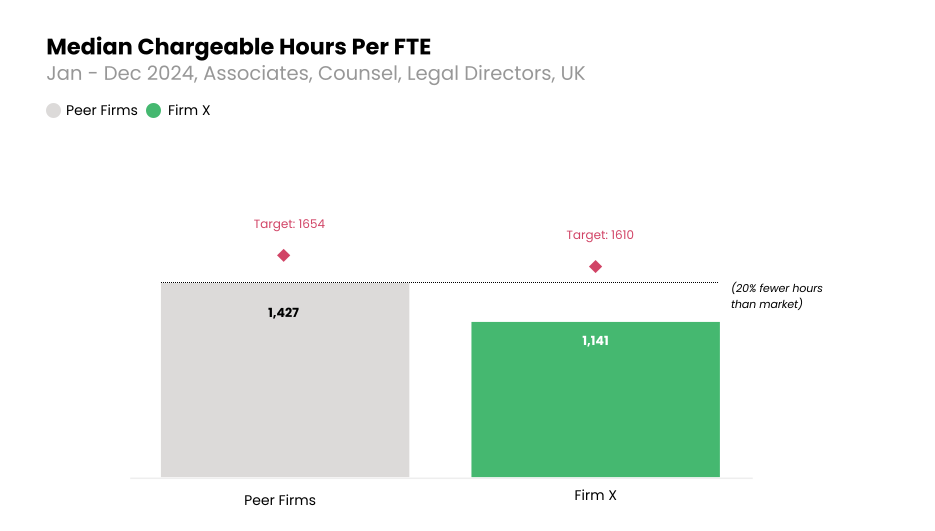
Firm X’s Associates Are 20% Or £10m Per Year Less Productive Than Peer Firms’, Despite Having Similar Chargeable Hours Targets.
What can Firm X learn from the market to increase productivity?
💭 If Firm X increases their salary, will they get more?
No. Higher salaries are not correlated with higher productivity at any seniority.
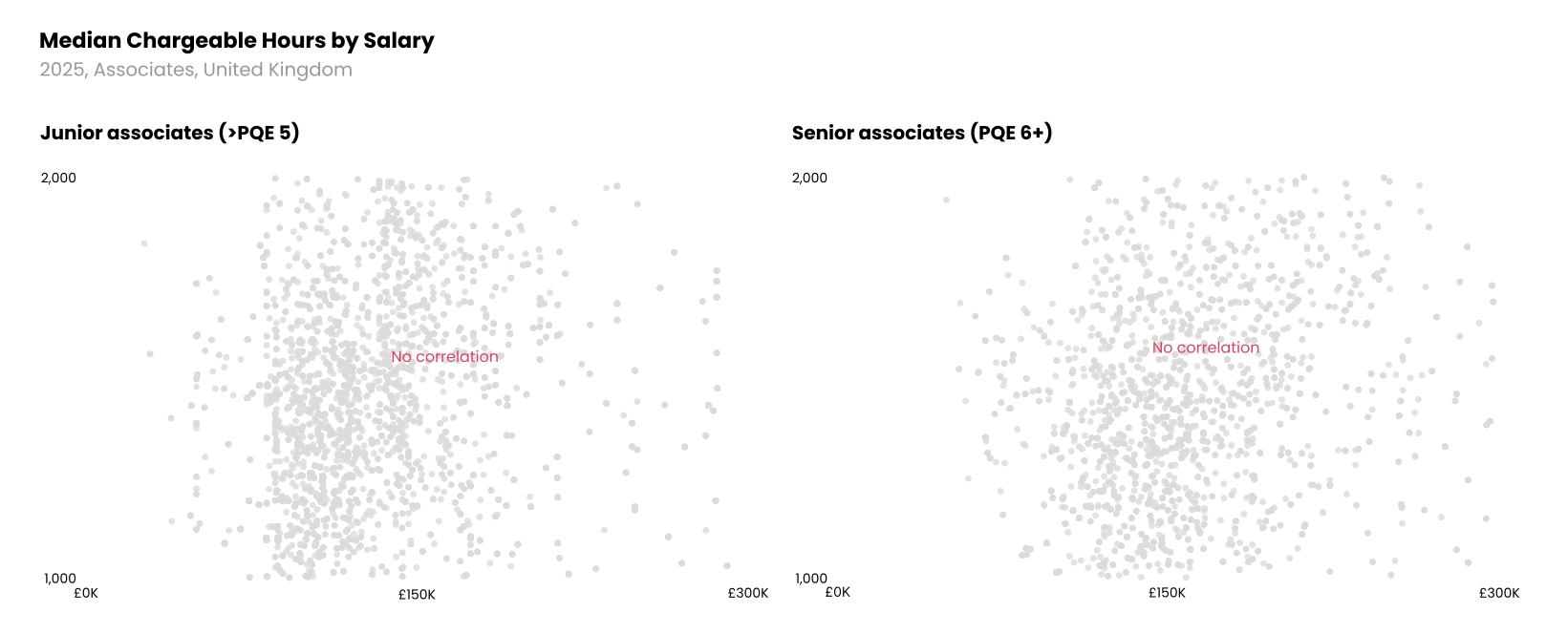
They are, however, correlated with higher targets (or the
expectation of more work). This means: if I ask for more, I must pay more.
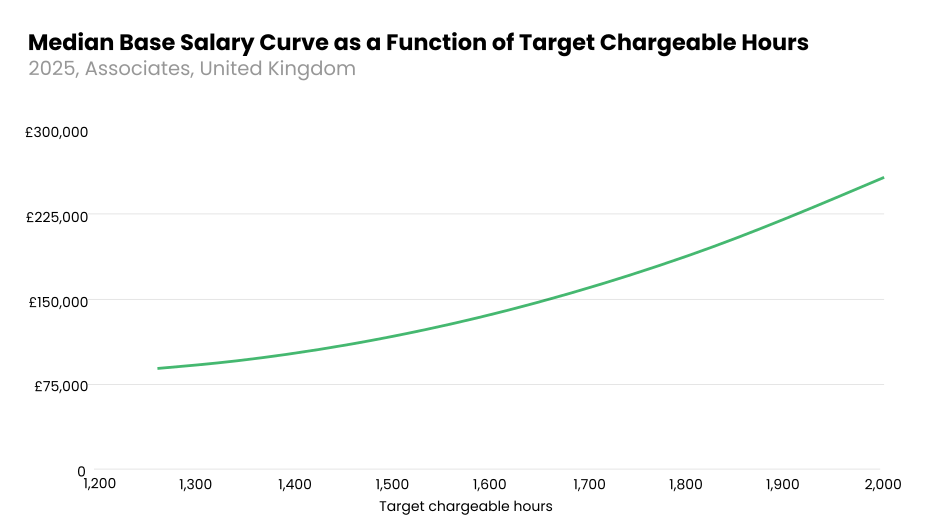
💡The correlation between targets and salary is not linear. Above ~1750 hours, each incremental 50-hour increase corresponds to a disproportionately larger salary adjustment - needed to pay for more significant trade-offs.
- At 1,800 hours, you’re working flat out. 😪
- At 1,850 hours, you need to pay for convenient exercise, so you buy the expensive gym membership closer to your house. 💪
- At 1,900 hours, you need to pay for convenient food, so you buy a meal delivery service. 🍽️
- At 2,000 hours, you need to pay for convenient childcare, so you hire a nanny. 🧑🍼
But salary is only part of the story. To really understand how lawyers are incentivised, it is important to look at bonus structure.
💭 If Firm X increases their bonuses, will they get more?
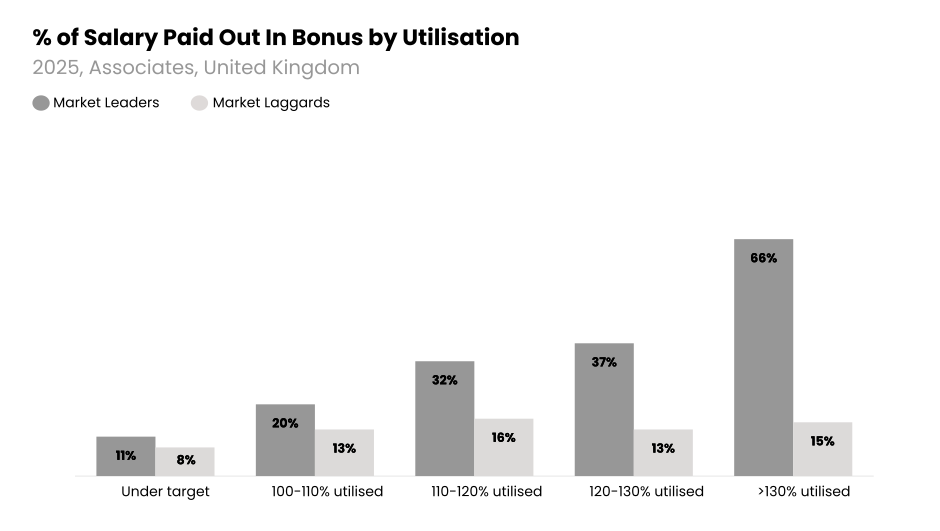
Bonus structure differs notably between the most productive firms (leaders) and the least productive firms (laggards) in two main ways.
1. Laggards pay out more individual bonuses to associates who have not hit their target. Leaders pay out fewer bonuses to this group.
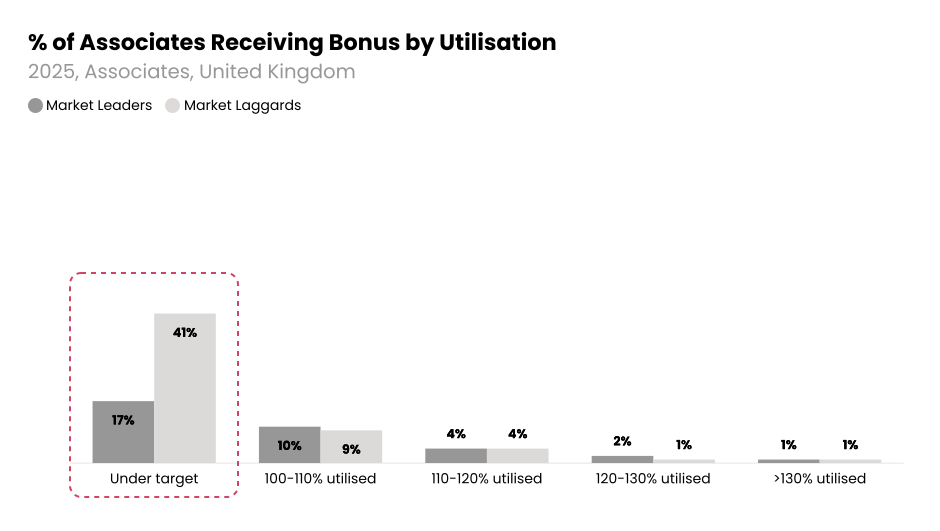
2. Laggards also cap off bonuses, whereas leaders don’t. This means leading firms provide an incentive to keep working marginal hours after the target has been hit. Laggards don’t.
💭 Besides carrots, should Firm X use sticks to increase productivity?
Leaders and laggards respond to their 25% least productive associates differently, suggesting differences in their performance management practices.
Leaders have 2x-3x higher
involuntary exit rates of the least productive associates compared to Laggards, suggesting more decisive action around underperformance.
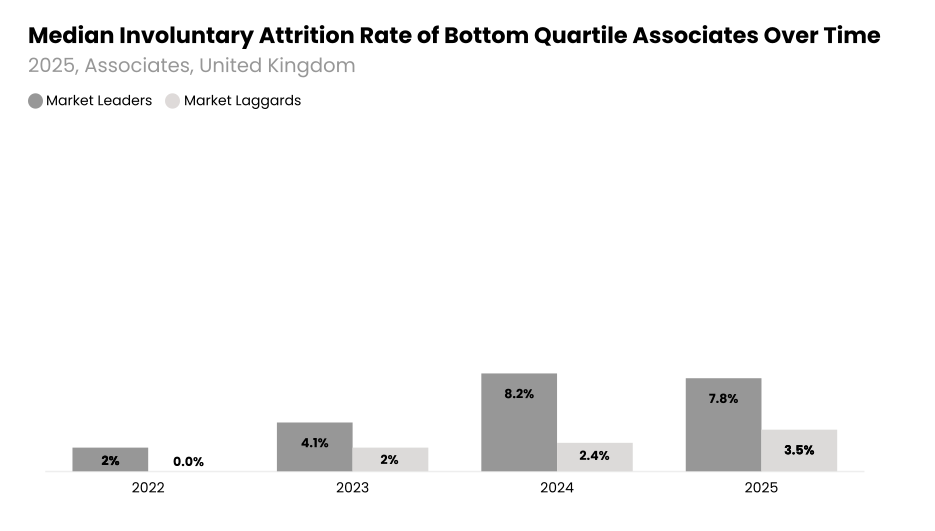
But leaders also had stronger performance one year later of the least productive associates who were retained. In other words, when leaders choose not to exit a bottom-quartile performer, that individual is significantly more likely to improve.
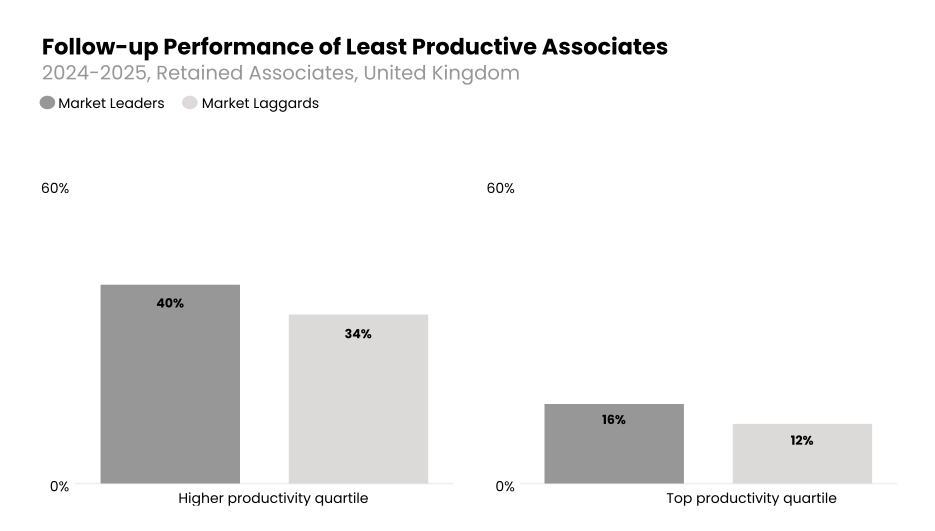
These findings suggest that Leaders are more likely to actively manage underperformance, rather than just tolerate it.
Bonuses and performance management were both actionable opportunities identified by Pirical for Firm X. Together they will help close the £10m revenue gap between Firm X and peers and help Firm X better compete in today’s legal market.
Analysis powered by Pirical on Demand (POD)
Pirical's award-winning technology unifies legal data to power the business of law
See this analysis with your firm's data and much more with a
Pirical On Demand subscription.
Receive exclusive tailored insights into critical challenges facing law firms. Learn what the top firms are doing that others can learn from.
Stay up-to-date with the latest market insights and law firm rankings
Subscribe to email updates
Subscribe to content